



Atoma, then and now

You need a more recent version of Adobe Flash Player.

download Adobe Flash Player

Sixty years ago Georges Mottart produced the first Atoma notebooks. The original binding system with plastic rings has hardly changed since.

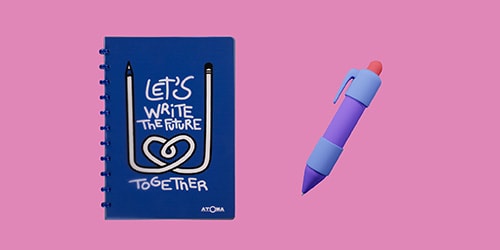
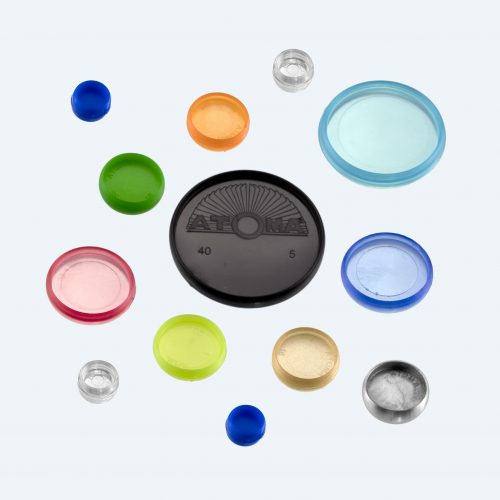
The Atoma notebook originated in the womb of the Atoma firm, which was then called "Papeteries Mottart" -- originally a wholesaler of paper products -- founded last century in the nineteen hundred twenties by Georges Mottart. Georges Mottart had the duo formed by André Thomas and Andre Martin work on a new type of writing book that eventually resulted in the ring system. They called this system "Atoma", after the initials of both their names, and Georges Mottart had the system patented. In 1948 he started producing this revolutionary new system that allowed pages to be removed from or moved within the notebook.

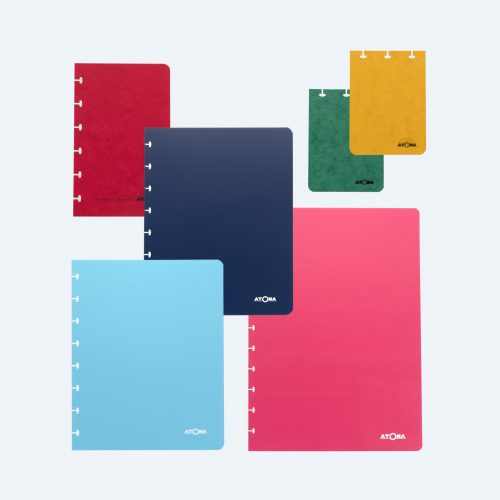
At first, only A5 notebooks with the typical "Lyon" clouded cardboard covers were produced. Later, A4 and other format notebooks, with cardboard or PVC covers, joined the assortment. This, with a continued selection of quality paper: 90-gram long fiber paper.
The launch of the Atoma notebooks coincided with the advent of the course blocks of paper with two holes and the binder, which quickly became very popular. But Georges Mottart counter-attacked by visiting schools to demonstrate the benefits of Atoma. And here started the success story.

You need a more recent version of Adobe Flash Player.

download Adobe Flash Player

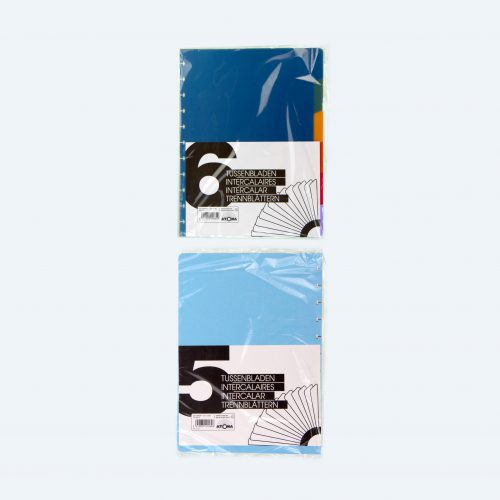
Meanwhile, the third generation, Chantal Vancanneyt and her brother Pierre-Michel, has been at the head of the company for several years. They stopped the wholesale business to fully concentrate on the Atoma production. They have let designers be creative with the covers, and the range was seriously extended to products other than notebooks (storage, albums, etc.).
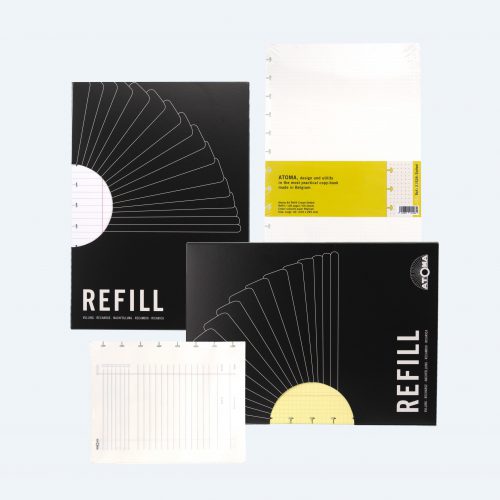
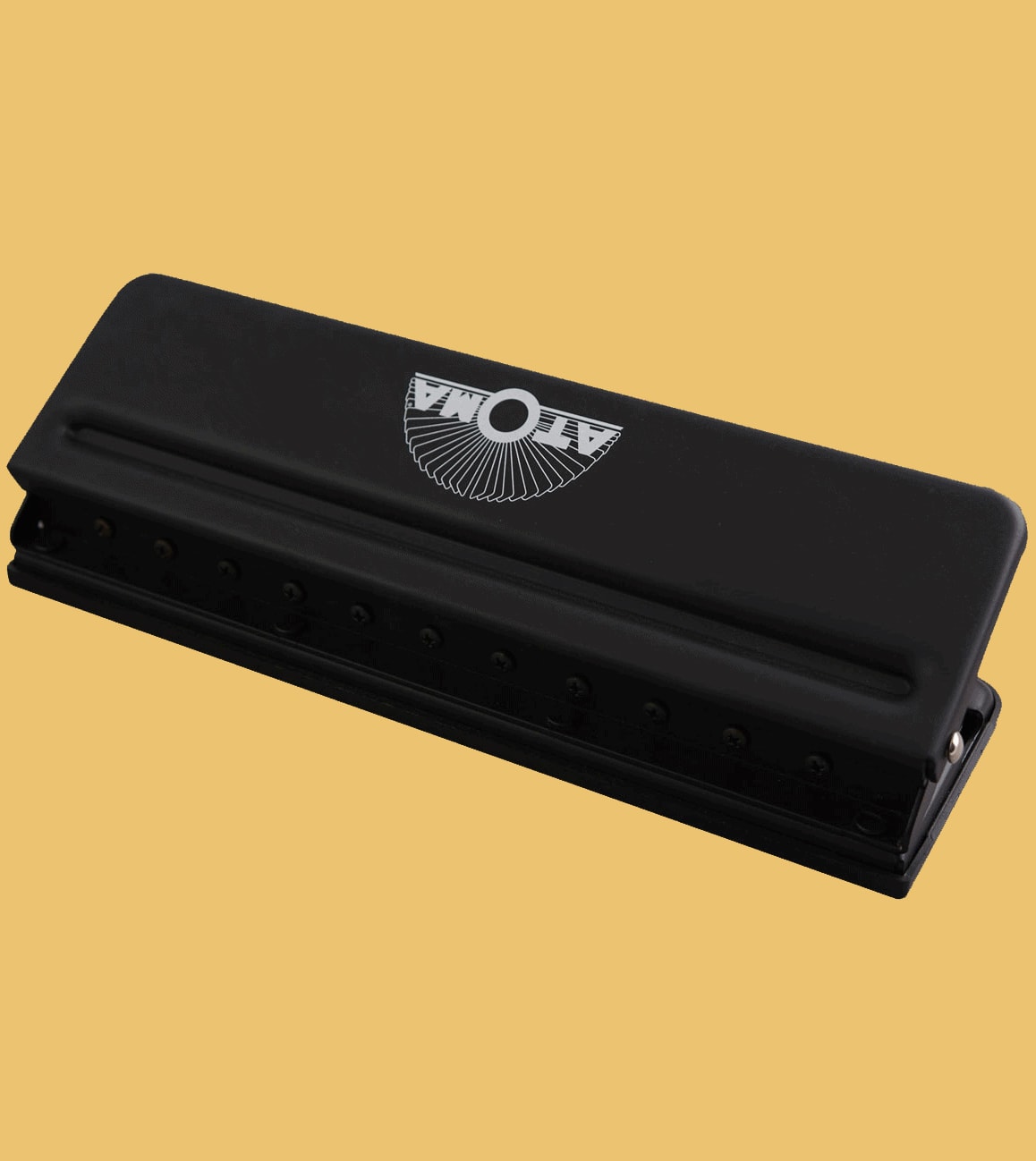
There is now also an Atoma hole puncher that allows you to make the typical Atoma cuts at home. Additionally, you can now have your own printed matter bound with the Atoma system.

The entire production is done with just twelve people. Every day some four thousand notebooks are produced which brings the yearly total to 1.2 million.
Eighty percent of the production remains within our own country. The remaining twenty percent is destined for abroad.
After almost a century, the company recently moved to a new location in Dilbeek, Belgium.